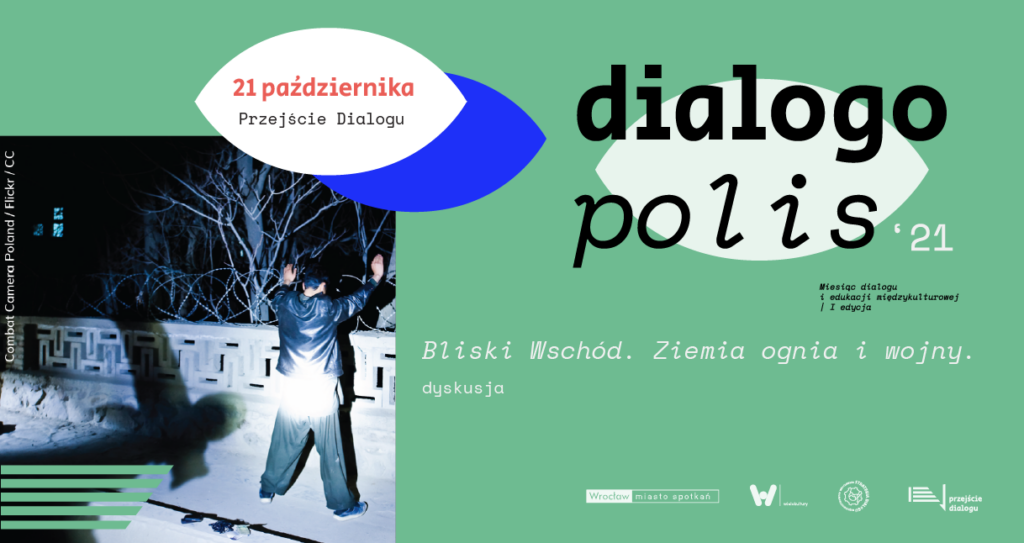
The war in Afghanistan (or rather, the end of the US involvement in it) and the withdrawal of American troops from Kabul have dominated the world’s media for several months. But can this conflict be considered in isolation from the other problems that have plagued the region for years? What does Afghanistan have in common with the war in Syria, the rise of the Islamic State, the conflict between Saudi Arabia and Iran, or the humanitarian crisis and bloody war in Yemen? Have al-Qaeda, ISIS and other terrorist organisations been completely wiped out, or do they have cells and headquarters elsewhere? More than 10 years have passed since the Arab Spring.
The dictators – Saddam Hussein of Iraq, Hosni Mubarak of Egypt and Muammar Gaddafi of Libya – are long dead. But are the people of the Middle East and the neighbouring Arab countries truly free today? What about the Israeli–Palestinian conflict, which is constantly being revived by various politicians and political factions? And finally, is lasting peace in the Middle East possible – and if so, when? We will discuss all of this with our guests at a meeting held as part of GLOBAL WRO.
The meeting aims to encourage the people of Wrocław to broaden their perspective on political, social and cultural realities. We will discuss quality of life in non-European countries, armed conflicts and mass migration. We will not shy away from difficult topics such as war, displacement and human rights violations in particular countries.
Registration: http://kalejdoskopkultur.pl/?p=4626
Format: discussion
Who should come: anyone interested in the topic
Room capacity: 20
Live stream on Facebook
Format: discussion
Who should come: anyone interested in the topic
Room capacity: 20
Live stream on Facebook
Ziad Abou Saleh – a Syrian who has lived in Wrocław since 1983. He graduated in computer science in 1989 and obtained his doctorate in sociology in 1997. Since 2000 he has been a university lecturer with experience in the humanities. He works with SWPS University and WSB University in Wrocław, teaching intercultural sociology. Since 2000 he has also been an expert in negotiation and intercultural communication between Poland and the Arab world, and runs business training courses. He is the author of the book “W poszukiwaniu piątego kąta, czyli obcokrajowcy o Polakach” (In Search of a Fifth Corner: Foreigners on the Poles) and of numerous publications and academic articles on the processes and challenges facing the Arab community in Poland and Europe. By choice, he considers himself a member of both national communities: Polish and Syrian.
Diana Qadri – born in Poland, she emigrated with her parents to Jordan at the age of 13 and spent most of her life there. For the past five years she has been living in Poland again, running a small business in Wrocław. As she says, being part of two such different cultures from childhood awakened in her a need to see the bonds and shared “universal” values between people. This desire to understand drew her to politics – especially Western policy in the Middle East – and to writing about the dynamics of international relations.
Maciej Stasierski – a lawyer specialising in immigration law, which he has practised for almost a decade. An expert in legalising foreigners’ residence and employment in Poland, and an entrepreneur. Outside work, he is a film critic, a long-standing blogger behind the Watching Closely blogging platform, a podcaster, and an activist involved in immigration law, the situation of minorities in Poland and LGBTQ+ issues.
Piotr Kaszuwara – a journalist. For 20 years he has contributed to many Polish media outlets, including Onet.pl, Polsat News, Polish Radio’s Programme Three, Radio Wrocław and Money.pl. Founder and editor-in-chief of the www.KolorowePtaki.com. portal. Lecturer at the Institute of Journalism of the University of Wrocław, war correspondent in Donbas in eastern Ukraine, and one of the few Western journalists to have visited the so-called Donetsk People’s Republic. He has also reported as a war correspondent from Georgia, Nagorno-Karabakh and the West Bank, and works as an investigative journalist, reporter and documentary film-maker. He specialises in the philosophy of Zygmunt Bauman and the fiction of Stanisław Lem – a self-styled “Lemologist”.
Dialogopolis is delivered as part of the ReSTART project, co-financed by the National Programme of the Asylum, Migration and Integration Fund (AMIF) and the state budget.